
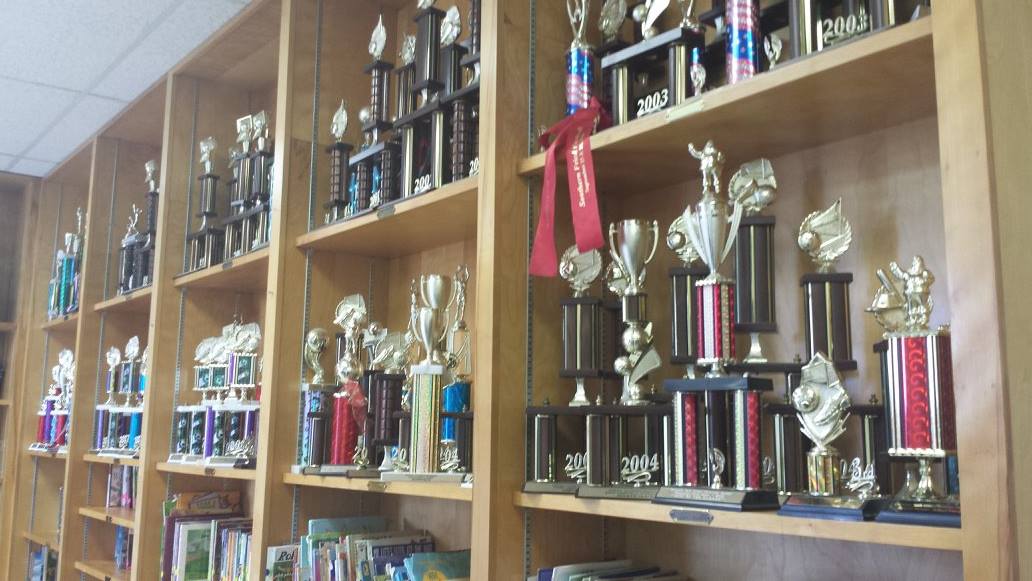
 We visited Kings Daughter on a beautiful, sunny, winter day in between sessions of a conference we were attending in Nashville. It was a pleasure to tour with Nikki Rogers, Peak Educational Consulting and Mary Jo Barnett, Pathways Educational Consulting. The King's Daughter School is a residential school located in Columbia TN about an hour south of Nashville. They are a large sprawling campus that serve children, adults, and young adults, with intellectual disabilities and those who are on the more severe end of the autism spectrum, including children who are non verbal. We were enthusiastically greeted by Dr. David Craig and Shauna Bryant, the Executive Director and Assistant Executive Director. Their warmth and generosity of spirit, and commitment to their students shine through the moment you meet them. Dr. Craig and Ms. Bryant began our meeting by telling us, about the different types of students who attend their school. They work with children who are all special education with an IQ below 70. Some of the disorders that they work with are, Prader Willi, Down Syndrome, Autism, Intellectual Disabilities, and Fetal Alcohol Syndrome. Dr. Craig and Ms. Bryant described a type day for students. Incorporated throughout the day in the school setting are, life skills, social skills, recreation, and of course academics. The school class periods are reduced to 35 minutes and they have more class periods than the average school on a typical day. There is strong recognition that students have limited attention spans, and low frustration thresholds and become easily overwhelmed. The school also provides outings and excursions in the community and invites the community to partner with the school. They provide many different therapies but are especially proud of their recreation therapy. Dr. Craig was beaming when he showed us the wall of trophies for the 19 different sports the Special Olympians participated in. The program is all encompassing offering a preschool to local families. Total enrollment for the school program is 120 students who come from throughout the United States. Also offered is a transition program for its young adults and even a separate program for adult graduates. Students have vocational opportunities including a sheltered workshop on site. The program works with a concrete behavioral system, with points, a token economy, reward bucks where the students earn privileges throughout the day. The students operates in two groups according to the pace of their work. As we toured the physical facilities, we were greeted by several students who couldn't wait to say hello. They were happy, enthusiastic, curious and engaged. It was a pleasure to get to know them. Our tour included the school, the gym, the pool, and the residences. The boys house was bright, spacious and airy. It was so clean that we doubted that boys actually lived there. We commented that the house smelled like fresh laundry! Unusual for even the most neurotypical of teens. We thoroughly enjoyed our time at King's Daughter and thank them for their time to show us around.
0 Comments
|
AuthorMindy Goodman Archives
March 2020
Categories |
 RSS Feed